
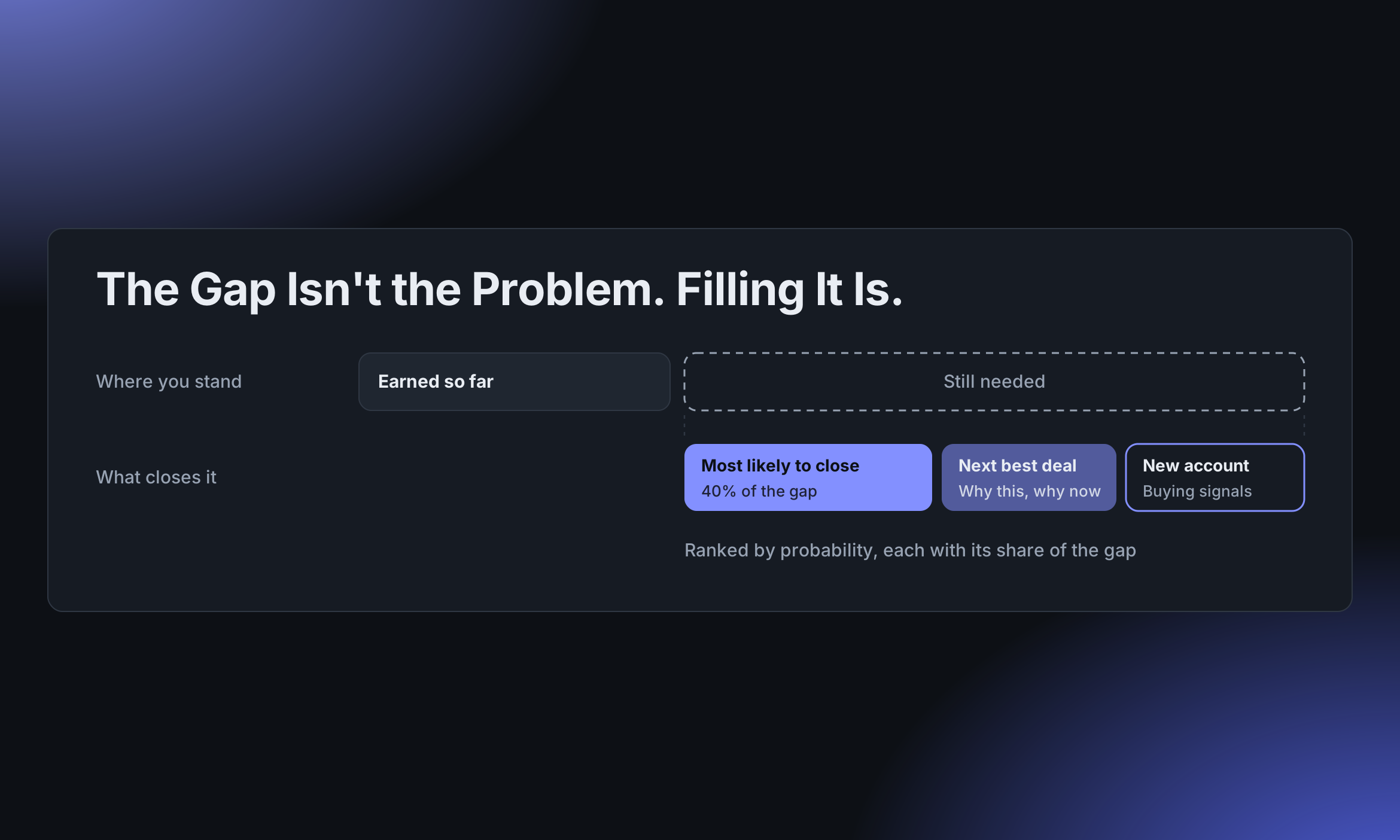
The Gap Isn't the Problem. Filling It Is.
By Aaron Williams, CCO & Co-founder, Aptiro
In short: Every rep knows their number. What eats their week is finding the deals to hit it: hours of searching LinkedIn, Google and old contacts just to build a prospecting list. At Aptiro, the gap comes with the answer attached: the deals and accounts most likely to close it, ranked by probability, so reps spend their time selling rather than searching.
Part one: the search that never ends
Picture an AE at the start of the quarter. They have a number, and three ways to build the pipeline that hits it.
- SDRs: a weekly catch-up to understand what's coming down the pipe.
- Inbound: whatever the website and marketing bring in, and in larger organisations, whatever sales ops and their tools route through.
- Outbound: everything else, and that part is on them.
Outbound is where the week disappears. Searching LinkedIn, then Google, then back through old contacts. Working out which companies fit, who to speak to, and whether now is even the right time. Hours of work to build a list that might hold a deal or two.
One industry study puts prospect research at around 11 hours per SDR every week, with manual CRM work taking another 5 to 6 hours per rep (source). That's roughly two working days gone before a single buyer conversation.
Pressure is part of the job, and good salespeople thrive on it. The problem isn't the pressure. It's how much of the effort goes into working out where to point it.
Why isn't knowing your number enough?
Nobody in sales is short of numbers. Managers live in them, and every rep knows their quota to the pound.
But a gap only tells you how far you have to go. It doesn't tell you which way to go. A rep who's £80k short with three weeks left doesn't need reminding. They need to know which accounts, which deals and which people are most likely to get them there.
That's the real job of a sales tool: not showing the gap, but showing how to fill it.
Part two: from what you've earned to what closes the gap
The clearest way to show this is through the number every rep actually cares about: commission.
- What you've earned: commission banked so far this period. That's where you stand.
- What's still needed: the gap to target, in the unit you're paid on, for this month or quarter.
- What closes it: the deals and accounts most likely to fill that gap, ranked.
Each one comes with a probability, a reason (why this, why now) and its share of the gap. For example: "this deal closes 40% of what you still need."
And it isn't only deals you already know about. This is where buying signal prioritisation comes in: surfacing new accounts and client types that fit your region and role and are showing signs they're ready to buy. That's the outbound list the AE above spent days building, ready on day one.
Knowing your number is easy. Knowing where it's coming from is the job.
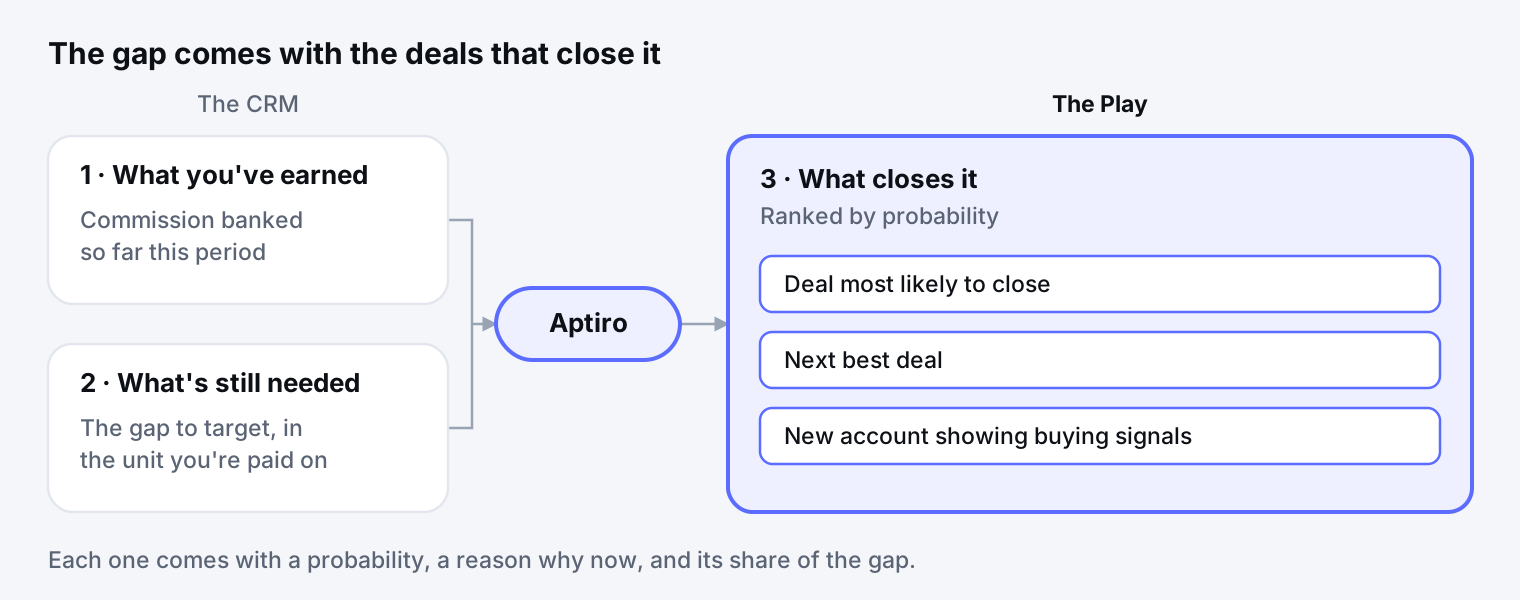
From what you've earned to what closes the gap
What changes for the rep?
Less time building lists, more time with buyers. The pressure doesn't go away, but it gets pointed somewhere useful.
It also feels different. A gap with a clear path to closing it is motivating. A gap on its own, in alarm red, is just stress.
Once you know which deals close the gap, the next question is how to go after them quickly. That's the next post.
The bottom line
Your reps don't need another number. They need to know where the next deal is coming from. Show them the gap with the best way to fill it, and the hours they spend searching go back into selling.
How much of your team's week goes on building prospecting lists? I'd like to know.
FAQ
What is buying signal prioritisation? Ranking accounts and contacts by signs they may be ready to buy, so reps reach the most likely buyers first instead of working through a cold list.
What is a quota gap? The difference between what a rep has closed and their target for a given period, such as a month or quarter.
Where does an AE's pipeline come from? Typically three sources: leads from SDRs, inbound enquiries, and the AE's own outbound prospecting.
Does Aptiro do the outreach for reps? No. Aptiro surfaces who to go after and why. The conversation stays with the rep.