
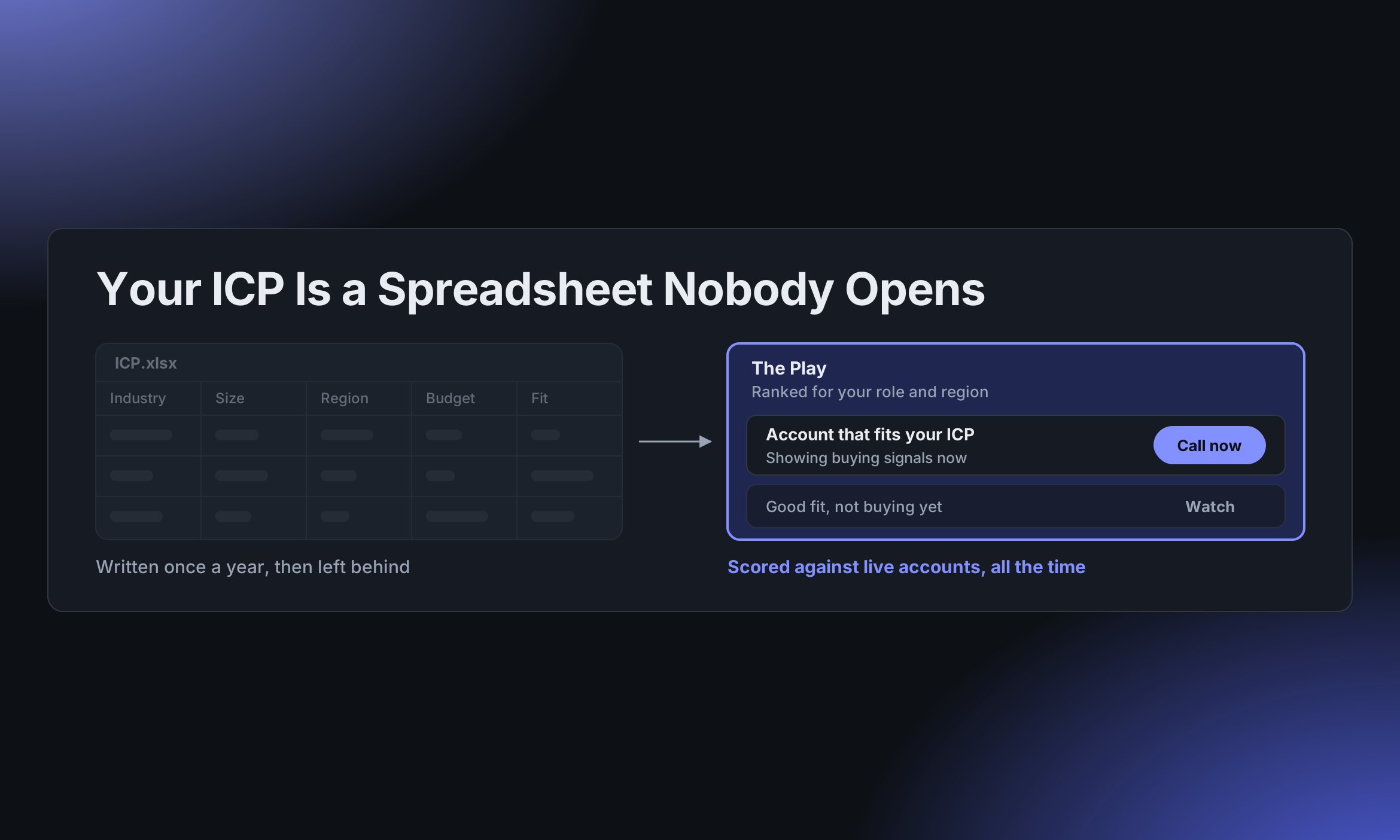
Your ICP Is a Spreadsheet Nobody Opens
By Aaron Williams, CCO & Co-founder, Aptiro
Most sales teams have an ideal customer profile. Very few use it on a Tuesday afternoon when a rep needs to decide who to call next. That's the gap between an ICP targeting framework and one that actually changes what reps do.
Typically, any experienced rep who joins a team, from strategic account managers down, is asked to map out their region: the accounts they'll go after and why, backed by whatever market data they can find. It's very useful to have, and it's standard practice in most SaaS sales organisations. But once a new rep is ramping, getting used to the technology and starting to sell, the plan gathers dust quickly. A territory plan and an ICP soon get left behind once someone's in the throes of a fast-paced sales role.
Myth 1: "We've defined our ICP, so we're done"
Reality: an ICP written once a year goes stale. Markets move, budgets shift, and the accounts that fit in January might not fit in June. A useful ICP is scored against live accounts, all the time.
Myth 2: "Everyone works the same ICP"
Reality: an AE chasing new business, an SDR booking meetings and an AM growing existing clients need different lists. So do reps in different regions. One profile, filtered for role and territory, beats one list for everyone.
Myth 3: "Fit is enough"
Reality: a perfect-fit company that isn't buying this year is a poor use of this week. Fit tells you who could buy. Signals tell you who might buy now. You need both.
Myth 4: "Targeting is the manager's job"
Reality: managers set the strategy, but reps make hundreds of small targeting decisions every week. Put the ICP where those decisions happen, and the strategy actually gets carried out.
It's worth getting right. Forrester research found that B2B organisations with aligned sales and marketing grow revenue 19% faster and are 15% more profitable than misaligned peers (source). A shared ICP is where that alignment starts.
An ICP only matters if it changes who you call today.
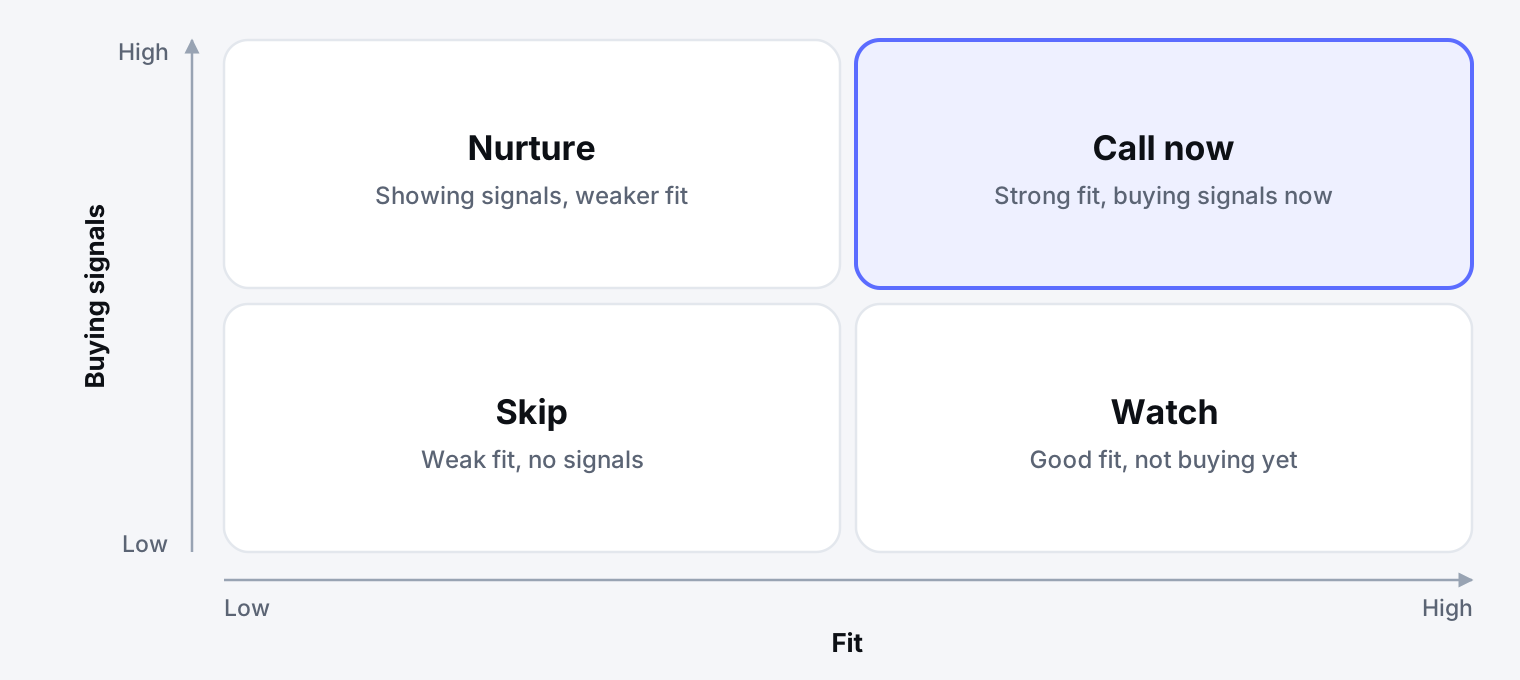
What this looks like in Aptiro
Aptiro scores companies against your ICP, watches for buying signals, and surfaces the accounts and client types that fit each rep's role and region. They land in The Play with a reason attached, so new business sits right next to existing pipeline.
The bottom line
Your ICP is probably right. The problem is where it lives. Move it out of the spreadsheet and into the moment a rep decides who to call.
When did your team last change who they target because of your ICP?
FAQ
What is an ICP? An ideal customer profile: the type of company most likely to buy, succeed with and stay with your product.
What is an ICP targeting framework? A method for scoring and prioritising accounts against your ideal customer profile so reps focus on the best-fit prospects.
What is the difference between fit and intent? Fit describes whether a company matches your ICP. Intent, or buying signals, suggests whether it may be ready to buy now.